About Reckoning Science
Science is an anchor to reality—for individuals and for society. When ideology, incentives, and emotion pull in different directions, science helps us stay oriented by requiring that claims answer to evidence.
But science is in transition. The practices and institutions that shaped late twentieth-century research are being reworked by shifting societies, changing norms, and advancing technologies. At the same time, many existential challenges ranging from anthropogenic climate change adaption to concerns about artificial intelligence alignment rapidly come into focus.
These disruptions can throw our perception of science off balance. From the outside, science is politicized and misrepresented: dismissed, distrusted, defunded, and pulled into cultural conflict. From the inside, it is strained by misconduct, malpractice, inappropriate corporate influence, and conflicts of interest that shape what gets published, rewarded, funded, and taught.
Reckoning Science starts with a simple premise: scientists of all kinds, and the broader community that values science, can face these changes with clarity. The failures of science can be discussed honestly without feeding cynicism. The defense of legitimate science can be firm and principled without slipping into tribalism, boosterism, or public relations.
We treat science as a human system embedded in turbulent circumstances, and we accept its human imperfections without abandoning its core purpose and ideals.
We will explore both big structural issues and concrete case studies across disciplines—tracking how individuals, institutions, and incentives interact. We hope to help you gain a clearer picture of what is happening, and to contribute to greater coherence within the scientific community.
About the authors
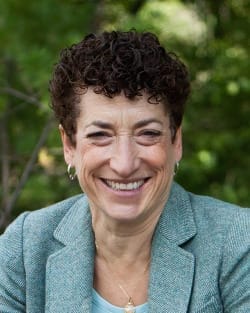
Naomi Oreskes is the Henry Charles Lea Professor of the History of Science at Harvard University and an affiliated professor of Earth and Planetary Sciences. Her work examines how scientific knowledge is produced, how consensus forms, and how science can be distorted in public debate. She is the co-author (with Erik M. Conway) of Merchants of Doubt and the author of Why Trust Science? She is the recipient of the 2025 Volvo Environment Prize, a 2018 Guggenheim Fellow, and was awarded the British Academy Medal (2019).
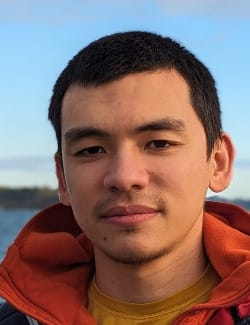
Alexander "Sasha" Kaurov is a researcher working at the intersection of science, society, and education. Trained as an astrophysicist, he completed postdoctoral work at the Institute for Advanced Study and is an affiliate research scientist at the Blue Marble Space Institute of Science (BMSIS). He later pivoted toward social-science research on scientific integrity and the institutional forces shaping what gets funded, published, and believed. He co-founded Earthlings Hub, a nonprofit providing science education to children affected by the war in Ukraine. He is currently pursuing a second PhD in Science and Society at Te Herenga Waka—Victoria University of Wellington.
You can reach out to us with questions, comments, or suggestions at editors@reckoningscience.org.