News
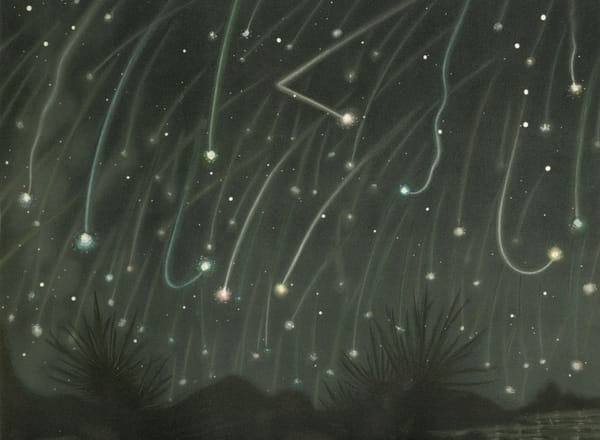
Let's stop doing irreversible things. Do we need a million satellites?
The FCC public comment period for two major satellite proposals is closing fast.
Naomi Oreskes is the Henry Charles Lea Professor of the History of Science at Harvard University and an affiliated professor of Earth and Planetary Sciences.

News
The FCC public comment period for two major satellite proposals is closing fast.

External Publications
In a recent Science essay, Naomi Oreskes argues that private philanthropy and corporate investment cannot replace sustained federal funding for research. Drawing on U.S. history, she shows how public support built the long-term research infrastructure that serves a wide range of national needs, from national defense to environmental protection.
Our research
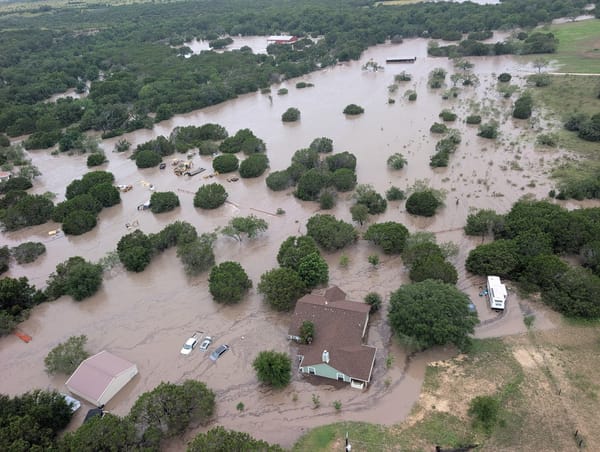
Climate change is no longer a distant “global issue.” It is local emergencies that carry the names of friends and neighbors. Heat waves, wildfires, flash floods, and other extreme weather events are becoming more frequent worldwide and more attributable to climate change. And yet, hardly anyone is talking about it,
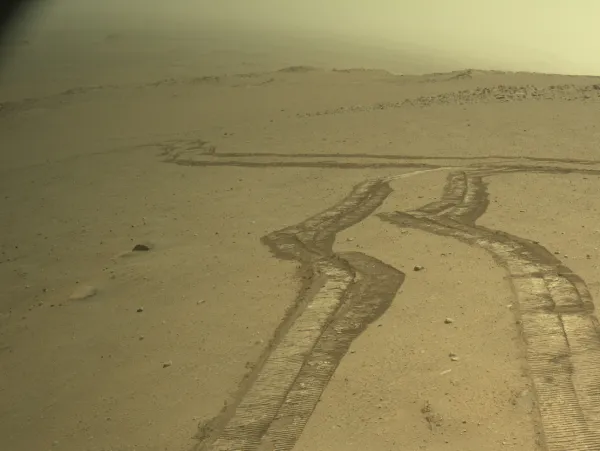
Mars has been a place for dreams for a long time. A god of war, a planet, the home of invaders in science fiction, more recently the scientific and space exploration frontier. The details change, but the function remains the same. Mars is a projection surface. It absorbs whatever story

Essays
Science is often spoken of as if it were a single institution: what science says, what science has shown. In practice, it is a tangle of labs, companies, contracts, grants, and norms that fall, broadly, into three lineages. One lineage is public and mostly open. It lives in universities, government

News
We believe in science and its achievements, but also in the need to examine how it is actually made, including its limits and its entanglements with politics, money, and power.
AI
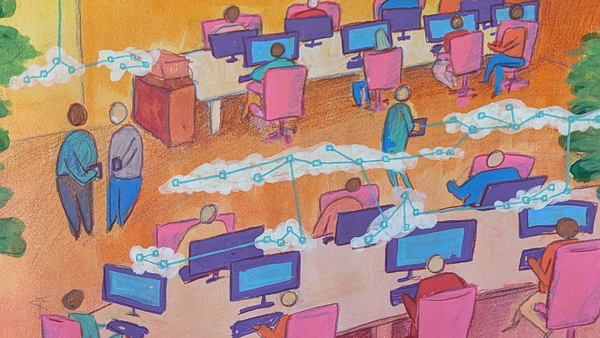
Self-correction is fundamental to science. One of its most important forms is peer review, when anonymous experts scrutinise research before it is published. This helps safeguard the accuracy of the written record. Yet problems slip through. A range of grassroots and institutional initiatives work to identify problematic papers, strengthen the