Lineages of Science in a Warming World: Who Owns Climate Knowledge?



Science is often spoken of as if it were a single institution: what science says, what science has shown. In practice, it is a tangle of labs, companies, contracts, grants, and norms that fall, broadly, into three lineages.
One lineage is public and mostly open. It lives in universities, government agencies, national observatories, inter-governmental panels. Its default is to publish, to make data and methods visible enough that journalists, citizens, and regulators can see, contest, and reuse them. It is a lineage that treats knowledge as a public good.
A second lineage is also public, but not open. That is the government science pursued for national defense and military purposes. In the U.S., it's been estimated that half of all government science funding in the 20th century had military motivations, and much of this science was classified (Oreskes, 2021). This lineage, although shrouded in secrecy, also sees knowledge as a public good (even if the public may not have access to it, or even know about it).
There are large literatures on these first two lineages, but the third is not much analyzed. And this is a problem, because it is growing, with potentially adverse consequences.
This third lineage is private science. It is mostly corporate and mostly closed. It lives inside firms, under non-disclosure agreements and trade-secret law. Its work is tied to product manufacturing pipelines, risk desks, and shareholder returns. Here, knowledge is valuable in proportion to who doesn't have it. Data, models, and expertise are assets to be managed.
These lineages overlap and borrow from one another. Public projects rely on corporate hardware and cloud platforms; companies hire academic advisors and co-author papers. A great deal of military scientific work during the Cold War was pursued in the private sector (Edwards, 1997). But their logics diverge. The logic of private science is competitive advantage.
While almost no one seems to be noticing, or at least commenting, in climate science, we are now watching one lineage—private and proprietary—edge out the other two. The pattern is familiar from social science and genetics: first privatize the data, then tighten the gate around access, and finally pull the people and expertise behind the corporate firewall. Let that run to completion, and we will end up in a world where the best understanding of climate risk lives inside financial and industrial stacks, while the institutions of democracy work with a thinner, slower, more conditional version.
This is not only about "data privatization." It is a struggle over who gets to know, in detail, how climate risks are distributed and changing—and therefore who gets to prepare, to profit, and to decide.
The Public Record and the Private Archive

Climate science, more than most fields, has always had a double life.
On one track, academic and government scientists spent decades assembling an open lineage of knowledge: the CO₂ concentration curve, general circulation models on public supercomputers, satellite archives, the Intergovernmental Panel on Climate Change (IPCC) assessments. Their job was to understand the system and tell the world what they found, in reports laid out for governments and publics. The United Nations Framework Convention on Climate Change (UNFCCC)—and the Conference of the Parties (COP) process it spawned—was rooted in the framework of scientists explaining to governments what they had found, on the premise that those governments would enact policies based on that knowledge. And no one country would be advantaged, because all would have access to the same information.
On the other track, fossil fuel companies built their own climate models. Beginning in the 1970s, Exxon's in-house scientists produced projections of global warming that were (we now know) remarkably accurate when compared with what actually happened. Shell and other majors ran similar internal assessments of how fossil fuel combustion would reshape the climate and shorelines. Shell, in particular, developed a sophisticated approach to scenario building as a means to anticipate future climate and economic change. Inside those companies, climate science was not a culture-war abstraction; it was an input to drilling plans, refinery design, and long-term business risk.
Of course, these tracks were not entirely separate. In the late 1950s, physicist Gilbert Plass, working at Ford aerospace, produced numerical estimates linking CO₂ to warming while moving from academic posts into corporate research. Plass was in conversation with important academic scientists at the time, such as Roger Revelle and Dave Keeling, the founders of what we now call the Keeling Curve: the famous graph that shows how CO₂ has been on a steady rise since the late 1950s. At the U.S. Air Force Cambridge Research Center, Christian Junge, for whom a layer of the stratosphere is named, studied the effect of pollutants (including CO2) on the climate, work that he shared with the U.S. Public Health Service.
But, by the 1990s, things had changed. The bridge between the lineages, however, was not open debate. It was disinformation. Instead of arguing over model parameters in journals, industry-aligned campaigns questioned scientists' motives, sowed doubt in the media, and turned climate into a partisan wedge. Private knowledge that could have helped societies prepare was instead used to postpone action.
Still, the open lineage pushed through. A whole suite of indicators—sea-level rise, a shrinking cryosphere, record-breaking heatwaves—pointed in the same direction. Denying climate change, or its human causes, increasingly required a cold-blooded indifference to converging evidence—or the capacity to lie with a straight face.
And this brings us to the phase now unfolding: not just disputing the science, but weakening or enclosing the indicators themselves; not denying that climate risk exists, but deciding who gets to know about it.
A New Chapter: Shrinking the Public Record
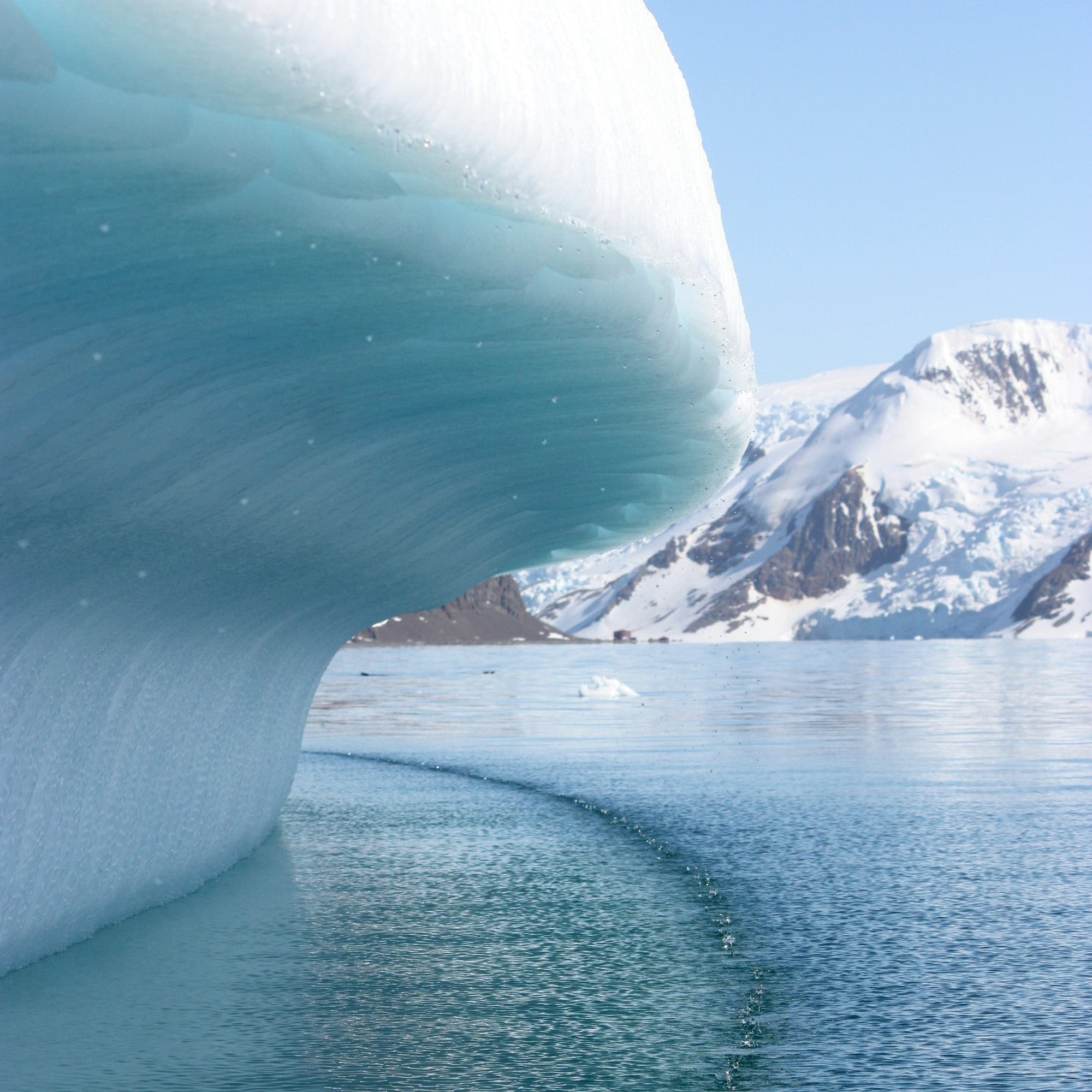
To be sure, there are still some who refuse to accept that human activities have changed the global climate, but a new and maybe even more disturbing struggle is emerging: over who controls which climate data are visible to the public.
Attempts to tighten that control are almost never framed as ideological attacks or corporate self-interest. They are wrapped in higher-minded language.
Sometimes the frame is "quality control." In Louisiana, a new law threatens community groups with fines of up to $1 million for sharing air-quality measurements that do not meet state technical standards, even as industry is exempted from comparable scrutiny (Associated Press, 2025a). Across pollution hotspots, community groups now use low-cost sensors and handheld methane detectors to reveal leaks that official networks miss; rules that penalize "non-standard" measurements would shut down exactly these citizen-science efforts that render invisible pollution visible (Hurdle, 2021; Messina, 2023).
Federal moves to "raise standards" can have a similar narrowing effect. A 2025 executive order on "Restoring Gold Standard Science" would require agencies to favor only studies whose raw data can be fully public—a meretricious move that sounds like open science but would in practice sideline the confidential health-records research underpinning air-pollution and toxics rules (White House, 2025; Harvard Environmental & Energy Law Program, 2021). In chemical regulation, strict reliance on Good Laboratory Practice does much the same: only industry GLP studies count as "regulatory-grade," while most academic work on endocrine-disrupting chemicals is ruled out (Lanier-Christensen, 2025).
Sometimes the frame is "unleashing prosperity." A proposed rule issued under President Trump's Executive Order 14192, titled "Unleashing Prosperity Through Deregulation," would dismantle most of the Greenhouse Gas Reporting Program (GHGRP), which since 2010 has required thousands of major industrial facilities to report their annual emissions. It would end reporting after the 2024 data cycle for nearly all sectors and delay methane reporting from oil and gas systems until 2034 (U.S. EPA, 2025; EPA Fact Sheet).
These initiatives remove information from the public domain. The GHGRP is a backbone dataset for communities, journalists and researchers trying to understand who is emitting what, and where. If it goes dark, public oversight over industrial climate pollution will go with it.
Sometimes the same effect arrives through budgets rather than rules. Staffing and budget cuts at NOAA have raised the prospect of hollowing out the National Weather Service at the very moment that more extreme weather is making its forecasts a life-and-death matter. An ABC News analysis this year explored what it would mean if private firms took over key parts of the weather enterprise: more customized services for paying clients, and a serious risk that critical warnings and data would end up behind paywalls.
Taken together, these moves starve core datasets and chill independent monitoring, pushing communities, journalists, public agencies, and even academics toward buying observations and models from private vendors.
At the same time, the commercial value of climate information is exploding. Flood, fire and heat risk now feed into mortgage underwriting, bond ratings, supply-chain planning and insurance portfolios (Condon, 2023). That is a powerful reason for the corporate lineage to invest—and to treat its best climate knowledge as a proprietary edge.
The Privatization of the Climate-Risk Stack
The climate-risk industry has grown up fast.

Moody's acquisition of catastrophe-modeling firm RMS in 2021 was explicitly justified as a way to bolster its climate and natural-hazard analytics (Moody's Corporation, 2021). S&P Global's purchase of The Climate Service in 2022 folded scenario modeling into a broader financial-data empire (S&P Global, 2022). A growing ecosystem of specialized vendors offers parcel-level flood, fire, and heat scores to banks, insurers, and real-estate funds—what one guide for journalists calls "a proliferation of private firms offering highly detailed climate risk assessments for sale" (Merrefield, 2025). Their business model is simple: see more, and sooner, than your competitors.
Public agencies are also being drawn into this orbit. NOAA's Commercial Weather Data Pilot tested private satellite radio-occultation data and concluded that they can support operational forecasting, a finding that paved the way for ongoing purchases of commercial observations (NOAA NESDIS, 2020). Reporting in Wired describes how staffing cuts are already forcing NOAA to lean on private balloons, drones, and buoys to fill gaps in its own observing networks (Wilcox, 2025).
NASA's Commercial Smallsat Data Acquisition (CSDA) program pays for access to methane measurements from firms like GHGSat and shares them with U.S.-funded researchers through a government portal—but under licenses that explicitly recognize the underlying data as proprietary assets of the company (GHGSat, n.d.; NASA Earthdata, 2025). Planet Labs allows universities to use its imagery under Basic Education and Research terms that restrict redistribution of the original data, even as derived products and analyses can be published (Planet Labs, 2021).
Seen from one angle, this is a pragmatic response to tight public budgets and rapid commercial innovation. No single public agency can afford to rebuild the satellite constellations and analytics stacks that venture-backed firms are willing to deploy.
Seen from the perspective of the tension between public and private science, open and closed worlds, the pattern is clearer:
- Public capacity is weakened or constrained. Budgets stagnate; hiring freezes; procurement rules ossify.
- Private substitutes become indispensable. Agencies buy data and services "off the shelf," often under restrictive licenses.
- The private lineage becomes the epistemic bottleneck. A growing share of the world's climate-observing capacity runs through contracts and licenses controlled by private firms, with public access as a contingent side effect.
This is the climate-risk stack in formation: satellites, balloons, and sensor networks owned by companies; models and analytics pipelines tuned for paying clients; risk scores feeding directly into balance sheets.
It is precisely the outcome the global meteorological community tried to guard against in 1995, when the World Meteorological Organization adopted Resolution 40: a commitment that essential weather data would be exchanged "freely and without charge" among national services (WMO, 1995). That resolution assumed that states were the main stewards of observing systems. It did not fully anticipate a future in which private constellations would hold the most detailed pictures of the atmosphere.
If privatizing climate data simply diversified sources, the trade-off might be acceptable. If it sparked innovation, that could be a net gain. But to anticipate the likely outcomes, we can look at fields that have already moved further down the same path.
The Playbook We have Seen Before
Climate is not the first field in which the private lineage has seized control of the richest data streams.

The most detailed behavioral datasets in history are not found in the pages of social science journals; they are embedded in social-media feeds, search logs, and mobility traces. These are, of course, owned by platforms and ad-tech companies. Their value has grown as traditional sources of public visibility have weakened. U.S. newsroom employment has fallen sharply since 2008, especially in local outlets (Pew Research Center, 2021). Governments that once maintained rich social-statistics programs have seen them defunded or outsourced. The result is an information asymmetry in which wealthy campaigns, hedge funds, and marketing conglomerates see society in high resolution, while publics and many regulators see a lagging, lower-resolution version.
For a while, platforms opened a narrow window for the public lineages, represented by academics and journalists. Twitter's APIs and tools like Facebook's CrowdTangle allowed them to map networks, track misinformation, and study how attention flows through public life. Academics rushed to learn from these rich data sources.
Then the terms changed. After Elon Musk acquired Twitter (rebranded as X), the company put research-grade API access behind enterprise tiers starting around $42,000 per month, effectively shutting out most academics, civil-society groups, and watchdogs (Stokel-Walker, 2023). Meta has now shut down CrowdTangle, replacing it with a more controlled, vetted platform that researchers and reporters say is less transparent and harder to use for real-time monitoring (Tow Center for Digital Journalism, 2024; Mozilla Foundation, 2025).
The lesson is not simply that access can be expensive. It is that access is hostage to the business needs and political moods of a few individuals and firms. There is no equivalent of WMO Resolution 40 for the behavioral data that structure modern politics.
Genetics has traced a similar curve. Iceland's deCODE Genetics built a population-scale biobank and analytic apparatus whose value went far beyond a single company. When Amgen acquired deCODE in 2012, it gained not just a unique dataset but an entire team of geneticists and research infrastructure (Amgen, 2012; Fortun, 2008). Large pharmaceutical firms now play central roles in initiatives like the UK Biobank exome-sequencing projects, shaping which questions get asked and at what pace they get answered.
Consumer-genomics firm 23andMe accumulated genetic and survey data from roughly 15 million customers. When the company's finances deteriorated, that dataset became a bargaining chip. After Regeneron's winning bid was challenged in the courtroom, the bidding was reopened and TTAM, a nonprofit led by 23andMe co-founder Anne Wojcicki, won approval in July 2025 to buy most of the company's assets. While TTAM pledged to pursue "scientific discovery for the benefit of all" (Bio-IT World, 2025), the uncertainty of data ownership raises fresh questions about who ultimately controls the information and on what terms (Associated Press, 2025b).
Across these cases, the pattern is strikingly consistent:
- The private lineage gravitates toward data that are dense, longitudinal, and commercially useful.
- It begins by offering some access in the name of collaboration and public good.
- Then, as politics, ownership, or revenue needs change, it closes the gate. Researchers, journalists, the public, and even governments lose access to data.
Climate knowledge is being drawn into the same pattern. The tempting narrative—that private firms are simply better equipped to innovate and manage—rarely asks to whom they are accountable, or what happens when their models and data become infrastructural to democratic life.
When "Talent" Follows the Data
The different lineages of science draw from the same graduate programs, conferences, and disciplines. What differentiates them is where people end up, the work they do, and how they do (or do not) share it.
Once data and computational power concentrate behind corporate firewalls, the most ambitious problems tend to migrate there too, at least if "ambitious" is defined as "big, computationally intensive, and well funded."
Geneticists who want to work with the largest genome datasets gravitate toward pharmaceutical companies and consortia with access to biobanks, pipelines, and trials. Part of what Amgen bought in its deCODE acquisition was the capacity to do world-class science that would be impossible on most public budgets. With that, they bought the capacity to recruit the best geneticists.
Computational social scientists and statisticians have made similar moves into social networks and ad-tech companies, becoming "data scientists" or "trust and safety analysts." Their work draws on the same training as their academic peers, but their responsibilities are framed differently: optimize engagement, manage reputational risk, refine targeting. The civic language of "social science" dissolves into the neutral language of "data."
In climate, a new generation of modelers, statisticians, and remote-sensing experts is being recruited into banks, rating agencies, insurers, and climate-risk startups. The pitch is familiar: more money, more computational power, more granular data, faster feedback from real-world decisions. For someone trained to handle complex problems, that is a powerful lure.
The HR term for all of this is "talent." It sounds complimentary, but it carries a quiet script. A talent is something a firm identifies, acquires, and develops to serve its goals. The scientist as someone with obligations to a broader public transmogrifies into the employee whose duty is to the company's strategy.
This is not a morality play about individual virtue. It is about structural gravity. When the private lineage controls the richest data, the best instruments, and the highest salaries, it also attracts the people best equipped to make sense of those things. The academic lineage becomes a training ground and a residual category, increasingly peripheral to where decisive climate knowledge lives.
Privatize the data streams, and the people who can navigate them will follow.
What Leverage Remains for Open Science?
If we still believe that an educated citizenry is essential to democracy, then we should care a lot about the rapid contraction of open science.
For climate, at least two forms of leverage remain for the open lineages.

The first is scale. Some projects are simply too big, too slow, or too unprofitable for private firms to undertake on their own. Once, those were space programs that counted as moonshots. Now much of that technology, such as launching a satellite, has become mundane. Today, "ambitious" would have to mean something larger: infrastructures so complex and so long-term that simply subcontracting every part of them would not work. Global observing systems, interoperable emissions inventories, and basic hazard baselines fall into this category. If the public lineages do not build and maintain them, no one else will build them in a way that is reliably open.
The second is regulation. Law and policy can designate certain kinds of information as public infrastructure rather than private advantage. WMO Resolution 40 did this for essential meteorological data three decades ago. The EU's Digital Services Act is attempting something similar for social network data, at least for vetted researchers (European Commission, 2025a; European Commission, 2025b) although the tech industry is fighting it tooth and nail, and recently won some concessions. In climate, analogous rules could treat emissions inventories, basic hazard maps and loss records as non-negotiable public goods, especially when they underlie regulated decisions about rates, zoning, or disaster aid. The point is not to ban proprietary models or datasets, but to make sure that when private knowledge becomes the basis for collective decisions, a minimally open, auditable layer is guaranteed.
In the United States, any regulation of data and models will require us to move politically uphill. But that makes it more important to be precise about what is happening. This is not just "data privatization" in some abstract sense. It is the privatization of knowledge: who gets to know, in detail, how risks are distributed; who gets to contest those assessments; who gets to change them.
It is dystopian to imagine a near future in which an academic climate scientist takes the temperature outside their window with a mercury thermometer after filling out paperwork justifying the act, while networks of advanced satellites fly overhead. But that is roughly where we already are in social science: state-of-the-art academic datasets have statistical power in the low thousands, while social networks record the behavior of billions. Climate is now drifting toward the same asymmetry. Whether we can still counter it depends on how we use the remaining leverage of scale and regulation—while they still exist.
References
- ABC News. (2025, March 25). Here's what it would take to privatize the National Weather Service. https://abcnews.go.com/US/privatize-national-weather-service/story?id=119871559
- Amgen. (2012, December 10). Amgen to acquire deCODE Genetics, a global leader in human genetics (Press release). https://www.amgen.com/newsroom/press-releases/2012/12/amgen-to-acquire-decode-genetics-a-global-leader-in-human-genetics
- Associated Press. (2025a, May 23). Louisiana stifles community air monitoring with threat of million-dollar fines, federal lawsuit says. https://apnews.com/article/9b15b263930ddb32a7c078745051f79a
- Associated Press. (2025b, July 1). Anne Wojcicki's nonprofit gets court approval to buy 23andMe for $305 million. https://apnews.com/article/3a0724d28030734a6b4ec8b0e5c952c5
- Bio-IT World. (2025, July 2). Anne Wojcicki buys back 23andMe for $305M, promises data security. https://www.bio-itworld.com/news/2025/07/02/anne-wojcicki-buys-back-23andme-for-305m-promises-data-security
- Condon, M. (2023, August 1). Climate services: The business of physical risk. Arizona State Law Journal. https://arizonastatelawjournal.org/2023/08/01/climate-services-the-business-of-physical-risk/
- Edwards, P. (1997). The Closed World: Computers and the Politics of Discourse in the Cold War. Cambridge: The MIT Press. https://mitpress.mit.edu/9780262550284/the-closed-world/
- European Commission. (2025a, July 2). Delegated act on data access under the Digital Services Act (DSA). https://digital-strategy.ec.europa.eu/en/library/delegated-act-data-access-under-digital-services-act-dsa
- European Commission. (2025b, July 3). FAQs: DSA data access for researchers. https://algorithmic-transparency.ec.europa.eu/news/faqs-dsa-data-access-researchers-2025-07-03_en
- Fortun, M. (2008). Promising Genomics: Iceland and deCODE Genetics in a World of Speculation. UC Press. https://www.ucpress.edu/books/promising-genomics/paper
- GHGSat. (n.d.). NASA Commercial Smallsat Data Acquisition (CSDA) Program access. https://www.ghgsat.com/en/nasa-commercial-smallsat-data-acquisition-csda-program/
- Harvard Environmental & Energy Law Program. (2021, March 5). The downfall of the "secret science" rule, and what it means for Biden's environmental agenda. https://eelp.law.harvard.edu/final-secret-science-rule/
- Hurdle, J. (2021, November 3). More eyes on polluters: The growth of citizen monitoring. Yale Environment 360. https://e360.yale.edu/features/more-eyes-on-polluters-the-growth-of-citizen-monitoring
- Lanier-Christensen, C. (2025). Between science and administration: Regulatory epistemology, corporate influence, and endocrine-disrupting chemicals. DePaul Law Review, 74(2), 399–. https://via.library.depaul.edu/law-review/vol74/iss2/8
- Merrefield, C. (2025, May 20). A journalist's guide to the climate risk data market. The Journalist's Resource. https://journalistsresource.org/home/climate-risk-data-companies/
- Messina, M. (2023, March 22). Citizen methane. KneeDeep Times. https://www.kneedeeptimes.org/citizen-methane/
- Moody's Corporation. (2021, September 15). Moody's completes acquisition of RMS (Press release). https://ir.moodys.com/press-releases/news-details/2021/Moodys-Completes-Acquisition-of-RMS/default.aspx
- Mozilla Foundation. (2025, March 14). Open letter to Meta: Support CrowdTangle through 2024 and maintain CrowdTangle's approach. https://www.mozillafoundation.org/en/campaigns/open-letter-to-meta-support-crowdtangle-through-2024-and-maintain-crowdtangle-approach/
- NASA Earthdata. (2025, September 30). Access to GHGSat data. https://www.earthdata.nasa.gov/about/nasa-support-snwg/solutions/access-ghgsat-data
- NOAA NESDIS. (2020, June 26). NOAA releases results of Commercial Weather Data Pilot (Round 2). https://www.nesdis.noaa.gov/news/noaa-releases-results-of-commercial-weather-data-pilot-round-2
- Oreskes, N. (2021). Science on a Mission: How Military Funding Shaped What We Do and Don't Know about the Ocean. Chicago: The University of Chicago Press. https://press.uchicago.edu/ucp/books/book/chicago/S/bo59258933.html
- Pew Research Center. (2021, July 13). U.S. newsroom employment has fallen 26% since 2008. https://www.pewresearch.org/short-reads/2021/07/13/u-s-newsroom-employment-has-fallen-26-since-2008/
- Planet Labs. (2021, May 5). Term/tenure for Basic Education & Research Program (Support note). https://support.planet.com/hc/en-us/articles/360019968118-What-Is-the-Term-Tenure-for-My-Basic-Education-Research-Program-How-Can-I-Extend-It
- S&P Global. (2022, January 4). S&P Global acquires The Climate Service, Inc. (Press release). https://investor.spglobal.com/news-releases/news-details/2022/SP-Global-Acquires-The-Climate-Service-Inc/default.aspx
- Stokel-Walker, C. (2023, March 10). Twitter's $42,000-per-month API prices out nearly everyone. Wired. https://www.wired.com/story/twitter-data-api-prices-out-nearly-everyone/
- Tow Center for Digital Journalism. (2024, July 9). Meta is getting rid of CrowdTangle—and its replacement raises concerns. Columbia Journalism Review. https://www.cjr.org/tow_center/meta-is-getting-rid-of-crowdtangle.php
- U.S. Environmental Protection Agency. (2025, September 16). Reconsideration of the Greenhouse Gas Reporting Program (Proposed rule). Federal Register. https://www.federalregister.gov/documents/2025/09/16/2025-17923/reconsideration-of-the-greenhouse-gas-reporting-program
- U.S. Environmental Protection Agency. (2025). Reconsideration of the GHGRP: Proposal fact sheet. https://www.epa.gov/system/files/documents/2025-09/reconsideration-of-ghgrp-proposal-fact-sheet.pdf
- White House. (2025, May 23). Restoring Gold Standard Science (Executive Order). https://www.whitehouse.gov/presidential-actions/2025/05/restoring-gold-standard-science
- Wilcox, M. (2025, August 9). Private companies are now gathering weather data for NOAA as staffing cuts hobble agency forecasting. Wired. https://www.wired.com/story/private-companies-step-up-to-gather-weather-data-for-noaa-as-staffing-cuts-hobble-agency-forecasting/
- World Meteorological Organization. (1995). Resolution 40 (Cg-XII): WMO policy and practice for the exchange of meteorological and related data and products. https://www.weather.gov/media/im/wmo_827_enCG-XII-Res40.pdf
