Essays
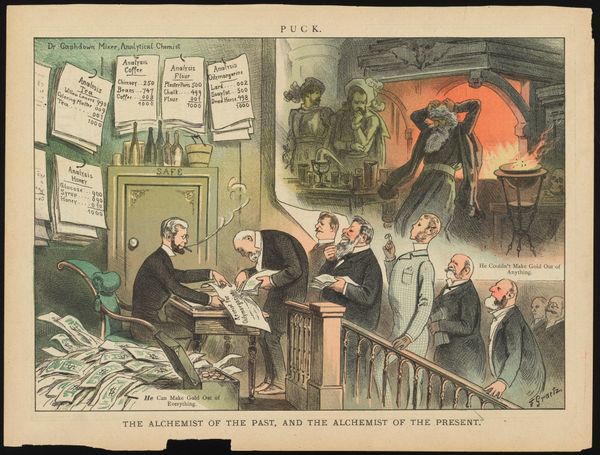
De Minimis, or "Sheer Nonsense"
The origin of the threshold below which a chemical in food need not be tested
Alexander "Sasha" Kaurov is a PhD astrophysicist. He is a fellow at Motu Research and an affiliate scientist at Blue Marble Space. Currently, he is a PhD student at the School of Science and Society, Te Herenga Waka—Victoria University of Wellington.

Essays
The origin of the threshold below which a chemical in food need not be tested

Sketch
Texas sets its own limits for hundreds of industrial chemicals. Where they can be compared with EPA's and ATSDR's, 36 of 41 come out the same or weaker. The reasoning is buried in thousands of pages of assessment.
Sketch
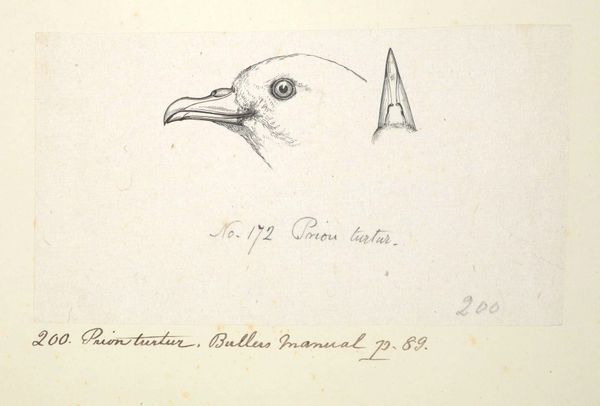
Seabirds picked up off Wellington beaches between 1958 and 1977 turned out to hold a record of the decade plastic arrived in the ocean.

On 24 July 2026, Syngenta announced it was withdrawing every paraquat product it sells in Australia and New Zealand. The reason given by the company's managing director for the region was not safety: “Regulatory constraints, combined with a highly complex and increasingly expensive supply chain, have made the

AI
The word “hallucination” has gotten a lot of mixed rep in science. “Hallucinated” references are a tell of lousy research, and vibe-written papers flooding the journals. At the same time, the word was used in the 2024 Nobel-winning method for deep-network “hallucinating” of proteins (Anishchenko et al.
Essays
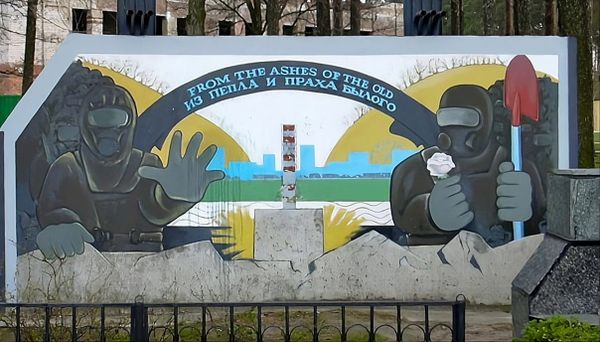
What is an acceptable risk? We, as individuals, can adopt different operational heuristics for handling risk in our daily lives, when it comes to personal, financial or health choices. But environmental and pollution issues affect whole communities, or even the whole planet, so we have to arrive at some common

External Publications
In this piece for The Conversation NZ, I show how bad science (manufactured mostly in the US) penetrates regulation worldwide, and how small countries without their own research capacity become dependent on it. New Zealand's approval of Roundup rests on three Monsanto-shaped reviews we've written
Essays
What does it mean for a chemical to be safe? The chemical industry as we know it is largely a child of the Second World War. The capacities built for the war effort — synthetic organic chemistry at industrial scale, nerve-agent research having common origin with pesticide research, polymer and

AI
Wikipedia's value is in its shared, if imperfect, factual reality, with edits tracked in public and editors who are, for all their biases, still human.

Sketch
Records kept for harvests, gods, festivals, and trade now tell us about the changing climate.

A few days ago, sixty-four individuals co-signed an editorial in Archives of Toxicology calling for the reversal of the November 2025 retraction of Williams, Kroes & Munro 2000 (hereafter WKM2000), published in the journal Regulatory Toxicology and Pharmacology. The editorial, authored by Christopher Borgert and 63 others, appeared

Our research
Half the world now uses generative AI assistants (Stanford HAI, 2026). Many of the queries ordinary people ask land on questions about science, including the contested-science topics this newsletter covers. So we decided to check something simple: how do these everyday AI assistants answer? Do they give consistent answers?