De Minimis, or "Sheer Nonsense"
The origin of the threshold below which a chemical in food need not be tested


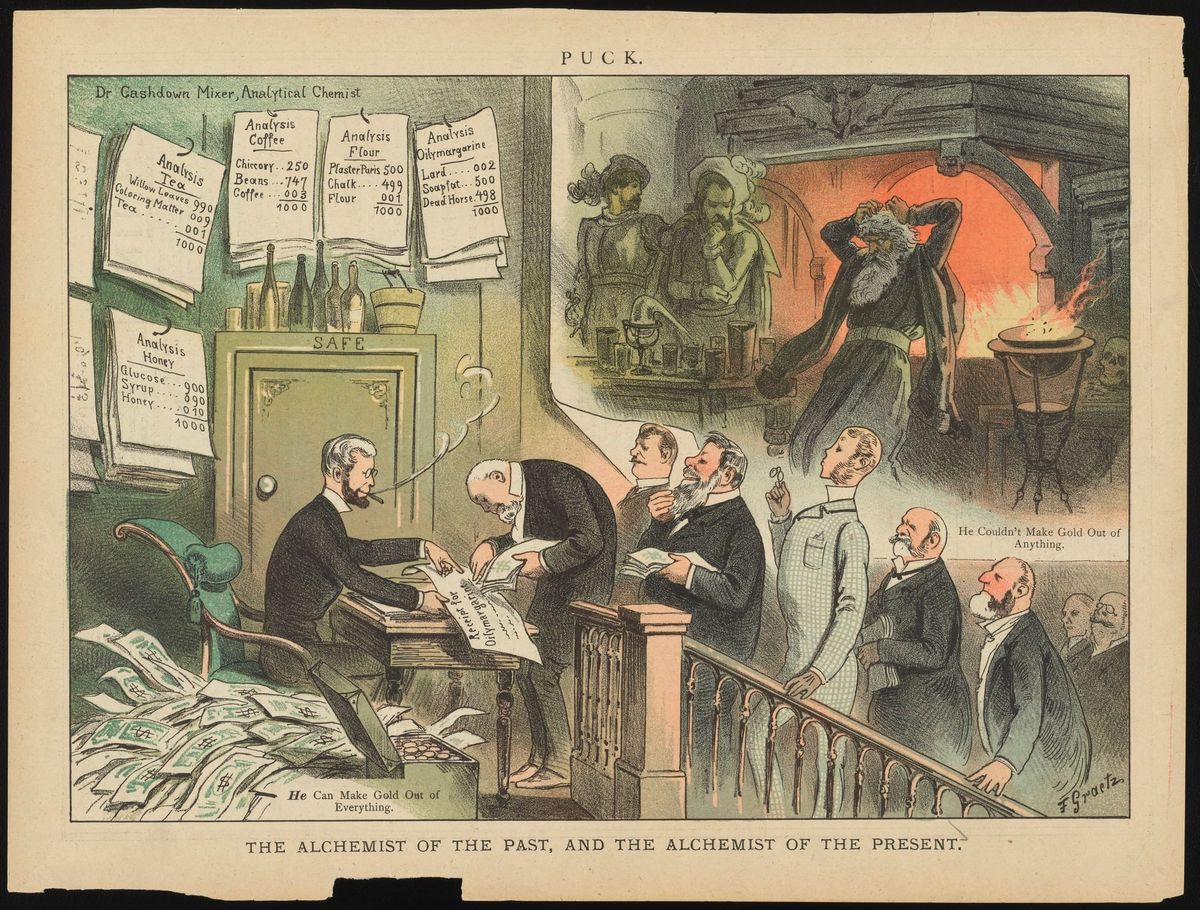
This essay is part of a series on the origins of the principles of regulatory toxicology. In earlier essays we examined how the 100-fold safety factor came to be used for converting animal toxicity data into limits for humans (Of Mice and Men and Round Numbers), and how a lifetime cancer risk of one in a million came to define acceptable risk (One in a Million). Here we turn to a third principle, de minimis: the proposition that below some concentration a chemical in food need not be tested at all. We trace it from its first formulation by an industry toxicologist in the 1960s to its adoption in United States regulation and case law.
In 1958 the U.S. Congress passed the Food Additives Amendment to the Federal Food, Drug, and Cosmetic Act. It shifted the burden of proof onto manufacturers: a food additive now had to be shown safe before it could be sold. The amendment exempted substances "generally recognized as safe" (GRAS), and it contained the Delaney Clause, a prohibition on any additive found to induce cancer in humans or animals.
Among the substances subject to the new requirement was rosin, a pine-sap resin used throughout food packaging. One of its main producers was Hercules Powder Company, an explosives manufacturer formed in the 1912 antitrust breakup of DuPont. To keep rosin on the market, Hercules had to run animal feeding studies. Its chief toxicologist, John P. Frawley, sought a general rule that would make such studies unnecessary for every chemical in the pipeline: any chemical would be presumed safe if it appeared in food below some small concentration. He took the name for it from law: de minimis, after de minimis non curat lex, the law does not concern itself with trifles.
Frawley's argument is presented below. Even though his proposal was ultimately rejected by the FDA, the principle he introduced later evolved into future regulatory frameworks. Therefore, this story shows how implicit assumptions about unknowns can create a framework presented as conservative, while its conservatism was never tested.
The method: an argument from ignorance
In 1967 Frawley gave a lecture to the British Industrial Biological Research Association titled Scientific Evidence and Common Sense as a Basis for Food-Packaging Regulations. His thesis was that US law had come to recognize no level of a chemical as insignificant, and therefore forced industry to prove through testing what he regarded as obvious:
Indeed, some of the most difficult things in life to prove are the obvious ones. ... A number of months ago, I sat down to try to prove something which was obvious to me — that there are some uses of food-packaging materials which cannot involve any hazard to health of the consumer of food.
He objected to what he called the "omnibus" permissive list — an all-inclusive positive list on which every use of a packaging material had to be individually cleared before it was allowed. Two things had produced it, he wrote:
This type of "omnibus" permissive list came about in the United States at the insistence of some segments of industry, coupled with a change in interpretation of our laws by the FDA — a change which revoked the long-established principle of de minimis non curat lex (the law does not concern itself with trifles) by claiming that the law does not recognize any level of a chemical as insignificant.
His alternative was to argue from what had already been tested. He had collected, he wrote, the no-effect level from "every chronic study which I could find, without any selection or rejection except irradiated foods" — 220 compounds in all. He observed that the most toxic were almost all pesticides and heavy metals. He set that class aside. Pesticides, he wrote, are "synthesized, screened and selected for their toxicity to one or more forms of life before becoming commercial products," and so tell you nothing about chemicals in general. That left 132 compounds, of which only one had a no-effect level in the range of 10–100 parts per million (ppm).
To obtain a human-safe dose, Frawley applied the conventional 100-fold margin of safety, dividing 10 ppm by 100. In an earlier paper he had called this the "ignorance factor" and stated that "Experience has taught us that this factor is overly conservative," without citing evidence. We wrote previously about the origin of the number 100 and the arbitrariness of using it to convert animal toxicity data into human limits.
His conclusion was that "all 132 of the non-pesticidal chemicals are safe for man's diet at a dietary concentration of 0.1 ppm or higher." That is, none of those 132 fell below 10 ppm, and a hundredfold below that, 0.1 ppm, was declared safe for all of them.
Frawley estimated that his rule would remove three-quarters of the citations in the US regulations, reducing both the regulatory burden and the testing required of manufacturers.
To accept the argument you have to grant four things. That 132 chemicals somebody had already got around to testing stand in for every chemical in use and every chemical to come; that no-effect levels are distributed regularly enough to extrapolate across; that a sample of 132 is large enough to catch the rare bad one; and that all 132 studies are sound.
Frawley did not address these implicit assumptions. His only assurance was that, in his opinion, a compound toxic at 0.1 ppm could not be manufactured, packaged and distributed "without revealing its toxicity through injury to personnel."
The whole argument rests on the appendix table, so we went and looked at the appendix table.
The table
![The appendix to Frawley's 1967 lecture, as printed. Acrylamide, at 40 ppm, is the single non-pesticidal exception he named and kept in. Aldrin, at under 0.5 ppm, is one of the pesticides he set aside. The third entry, alkyl ketene dimer, carries reference 3. Frawley 1967, Appendix, p. 303. [3]](https://storage.ghost.io/c/9a/bd/9abd6558-1e3b-4a0f-8af0-5511187df67d/content/images/2026/09/data-src-image-9c7ce9d2-7970-48cc-afa8-30a715b130ea.png)
The argument requires that every compound in the table have a threshold below which it is harmless. Nearly six decades of toxicology since allow this to be checked. A selection of those 220 entries show how our understanding of their safety has shifted:
- Vinyl chloride copolymer: 120,000 ppm. Its residual monomer is a human carcinogen (1974), IARC Group 1.
- Acrylamide: 40 ppm. IARC Group 2A (1994).
- DEHP: 1,300 ppm. Anti-androgenic: exposure during fetal development disrupts development of the male reproductive tract in rats (2000), IARC Group 2B (2011).
- Citrus Red No. 2: 500 ppm. Causes bladder tumours in rodents, IARC Group 2B (1975). The FDA left its approval in place after the IARC finding, and use on orange skins stayed legal. When the FDA moved to revoke it in July 2026, it cited lack of use as the reason rather than safety (no batch had been submitted for certification since 2020).
- Ponceau 3R: 5,000 ppm. As FD&C Red No. 1, delisted in 1960 for liver damage; IARC Group 2B.
The plastic with the highest no-effect level in the table, a vinyl chloride copolymer logged at 120,000 ppm (twelve per cent of the diet), is made from vinyl chloride. Traces of the unreacted monomer stay in the finished plastic and move into food. Vinyl chloride is a genotoxic carcinogen: it damages DNA directly, and regulators assume genotoxic carcinogens have no safe threshold, as discussed in One in a Million. A two-year feeding study of the finished polymer could not detect this. In 1975 the FDA proposed to bar rigid polyvinyl chloride (PVC) from food contact; it withdrew the proposal in 1986, by which time residual monomer in the resin had fallen roughly a millionfold.
Polyvinyl chloride remains permitted in food contact today. Vinyl chloride is under risk evaluation by the EPA, and the FDA is reviewing the phthalate plasticizers still allowed in food-contact PVC, DEHP among them.
Frawley's confidence in the validity of the method at the time was remarkable. He ridiculed the FDA's position that no level of a chemical is insignificant:
This denial of the existence of a toxicologically-insignificant level or biological zero is analogous to a denial of the existence of night, on the grounds that you cannot prove the absence of light.
Had they all been cleared at his level without testing, he wrote, "we would have been correct in 100% of the cases."
Such certainty also requires that all 220 studies be reliable. Four of them came from a commercial laboratory, Industrial Bio-Test, which was later shown to systematically fake data. Whether these four were audited is unclear. Three more were unpublished data from Hercules, Frawley's own employer.
The committee
The proposal was contested at the time. Frawley presented it at a National Conference on indirect food additives in February 1968, where W. H. Summerson, Director of the FDA's Bureau of Science, said much of it was "sheer nonsense," as Food Chemical News reported that week. The support for the proposal was organized. It was presented as endorsed by "twenty-four other toxicologists"; the campaign behind it was run by the Society of the Plastics Industry through its food-packaging committee, whose vice-chairman was Frawley's Hercules colleague Robert M. Miller.
A task force was appointed after the conference and had written its report in 1969: Guidelines for Estimating Toxicologically Insignificant Levels of Chemicals in Food. For a chemical that had been in commercial production five years or more without evidence of harm, it set the insignificant level at 0.1 ppm — Frawley's figure. For a chemical with no toxicological data at all, cleared only by its resemblance to compounds that had been tested, it set 1.0 ppm.
At the task force's first meeting Frawley announced that he would take no active part in writing the report. He had said it all already, he explained, in three articles. Then he read the committee's third draft and judged it timid — "we are still afraid to face the problem of insignificance with courage" — so he wrote his own version and mailed it to the members before their next meeting.
The report printed no affiliations. Theirs, at the time, were as follows:
- H. F. Smyth, Jr. (chairman) (Industry): Mellon Institute, Pittsburgh — the Union Carbide–funded Chemical Hygiene Fellowship
- J. M. Coon (Academic): Jefferson Medical College, Philadelphia — chair of pharmacology
- J. P. Frawley (Industry): Hercules Inc. — chief toxicologist, and author of the proposal
- R. L. Hall (Industry): McCormick & Company — director of research and development
- B. L. Oser (Industry): Food and Drug Research Laboratories, Inc. — a private commercial testing lab
- A. T. Schramm (Industry): Food Materials Corp.; chairman of the Certified Color Industry Committee
- J. A. Zapp (Industry): DuPont — director of the Haskell Laboratory of Industrial Toxicology
- W. J. Darby (committee chairman) (Academic): Vanderbilt University — biochemistry and nutrition
- Richard Henderson (employer not identified): Chairman of the panel's Industry Committee
Of the nine, six worked for industry. Darby, at the time academic, would within three years become president of the food-industry-funded Nutrition Foundation. Notably, the highest no-effect level in Frawley's appendix, the vinyl chloride copolymer at 120,000 ppm, came from a study by H. F. Smyth, Jr.
Thirteen years later Frawley opened the first issue of a new journal, Regulatory Toxicology and Pharmacology, with his article "The 1980s — A Decade of Change." The society that now owns the journal, the International Society of Regulatory Toxicology and Pharmacology, did not yet exist; it was founded three years later, took the journal as its own, and was funded by the industries whose regulation it debated — its first accounts record a gift of $1,000 from Hercules. Frawley was its president from 1988 to 1990.
By 1981 the Industrial Bio-Test scandal had broken. FDA inspectors had found that the laboratory's reports were not supported by its own raw data; EPA had frozen registration actions resting on IBT studies. Frawley's article did not mention it. He wrote instead of the days when industry and regulators "had mutual trust in each other, scientist to scientist." By 1981, he wrote, industry toxicologists "are guilty until proven innocent, which is merely an extension of the same philosophy that has been adopted for years concerning chemicals."
Frawley had co-authored four published studies with Joseph Calandra, the founder and president of Industrial Bio-Test; two of the four were multigeneration reproduction studies, the genre at the centre of the fraud findings. Two years after the RTP piece appeared, Calandra stood trial with three colleagues in Chicago. He did not reach a verdict: in July 1983 the judge granted him a mistrial, because he was about to undergo open-heart surgery and his lawyer said he could not withstand a long trial. His three co-defendants asked for the same relief on the ground that Calandra would have denied the charges and helped their case; they were refused, and in October they were convicted of mail fraud, wire fraud and false statements. We did not find any record that Calandra was ever retried. He died in 2002. A year earlier, Northwestern University had established a professorship in pathology and toxicology named in his honour.
From a table to a curve
Proposals for a general exemption continued. In 1969 an FDA scientist, Lessel Ramsey, drafted an exemption that would have allowed a packaging chemical migrating into food at 50 parts per billion or less to be sold without toxicity testing. The FDA sent the draft to the trade associations. However, in February 1971 Ramsey told an industry delegation that the proposal was still, in his opinion, "scientifically sound," but could not be published because it "would not be administratively advisable." A now-public memo from the industry's lawyers to the members of the SPI Food, Drug & Cosmetic Packaging Materials Committee records the reaction: "To put it mildly we were very disappointed with this advice."
In the late 1980s another FDA scientist, Alan Rulis, reformulated the proposal on a probabilistic basis. Rulis accepted that a carcinogen has no safe dose. The question then became not whether a dose is safe but how small a risk is acceptable, the move traced in One in a Million. Rulis restricted the analysis to cancer. His reason:
At exceedingly low exposure levels, say, less than 10 ppb, it is likely that potential carcinogenesis would be almost the only toxic phenomenon capable of producing any concern.
His data came from the Carcinogenic Potency Database, compiled at Berkeley by Lois Swirsky Gold and Bruce Ames from published animal bioassays. From it — 343 animal carcinogens at first, later 477 — he drew a distribution of potencies.
![Figure 1. The potencies of animal carcinogens from the Carcinogenic Potency Database, plotted on a log scale. Rulis 1992, Figure 1; a U.S. government work, FDA, not subject to U.S. copyright. [11]](https://storage.ghost.io/c/9a/bd/9abd6558-1e3b-4a0f-8af0-5511187df67d/content/images/2026/09/data-src-image-c572af39-388b-424a-8408-e614ea6e4c99.png)
Each chemical in the database comes down to one number, its TD50 — the daily lifetime dose that halves an animal's odds of staying tumour-free. Rulis drew a straight line from that point back to the origin, zero dose and zero risk, and called the slope of the line the potency. The line is an assumption of linear dose response, meaning that the risk falls off in proportion to dose, all the way down to zero.
To find the dose for a one-in-a-million risk you follow the line from the fifty-per-cent point to 10⁻⁶. It comes out at about two-millionths of the TD50. There is no experimental data for those concentrations. Rulis argues that it is actually a conservative approach:
Recall that these "risks" are conjectural and not actuarial in any sense. They are upper-bound estimates derived from a highly conservative linear extrapolation of data from animal studies. Furthermore, it has been presumed that the chemical in question is in fact a carcinogen. This is not likely to be true for more than about one in perhaps three to five randomly selected compounds.
Frawley had divided by a hundred for ignorance. Rulis divided by nothing, on the grounds that the straight line was conservative enough by itself.
Applied to every carcinogen in the database, this yields for each the dietary concentration at which the modelled risk equals one in a million. The threshold itself still has to be chosen. The figure below shows the trade-off: the lower the threshold, the larger the share of carcinogens it keeps under the one-in-a-million line.
![Figure 2. Horizontal axis: candidate dietary level in parts per billion. Vertical axis: the probability that a carcinogen at that level stays under the one-in-a-million line. Arrow A, 0.05 ppb (50 parts per trillion on Rulis's figure); arrows B (0.1 ppb) and C (1 ppb) bracket the range proposed by FDA's Philip Schwartz, its lower bound set by the limit of analytical detection; arrow D, 0.5 ppb, the level Rulis recommended and the 1995 rule adopted. The four curves are Rulis's own 477- and 343-carcinogen analyses and two of Munro et al.'s data sets. Rulis 1992, Figure 2; a U.S. government work, FDA, not subject to U.S. copyright. [11]](https://storage.ghost.io/c/9a/bd/9abd6558-1e3b-4a0f-8af0-5511187df67d/content/images/2026/09/data-src-image-a24a8f9c-254d-4e39-af21-fae2e98891a4.png)
Rulis worked the example at 0.05 ppb. At that level, about 85 per cent of the carcinogens in the earlier 343-compound set would stay under the one-in-a-million line and 15 per cent would not. He then introduced a second assumption: that only one in five untested packaging migrants is a carcinogen. That additional factor reduced the expected share of untested migrants exceeding the line from 15 per cent to 3 per cent, and turned 0.05 ppb into what Rulis called "better than 97 percent."
In 1992 Rulis named a level ten times higher: 0.5 ppb, arrow D, which he called "a reasonable balance between necessary conservatism and practical utility." He put it "midway in a range bounded by analytical limitations on one end and by increasing probability of presumptive toxicity on the other." The 1995 rule adopted that number. What came out of it was a single concentration, applied to every chemical nobody had tested. Rulis credited Frawley, noting that the point where ordinary toxicity fades out had been "observed and duly noted by Frawley in 1967, using a different data base."
There are two ways to read this story. The generous one is that science improved by iteration: a dataset of 220 grew to 477, and a division by a hundred became a probability.
We read it differently. The principle introduced in 1967, that the toxicity of an untested chemical can be inferred from tested ones, was never itself tested. It was carried forward. Each iteration was presented as conservative, and in each the conservatism was asserted rather than shown. Frawley called the hundredfold factor "overly conservative" without citing evidence. Rulis judged his straight line cautious enough to need no factor at all, then added an assumption of his own: that only one untested chemical in five is a carcinogen.
The data underneath were no better. A rule set by the tail of a distribution depends heavily on the reliability of the few studies in that tail. Three of Frawley's studies were his employer's unpublished files. Four came from Industrial Bio-Test, a laboratory whose pesticide studies the EPA later audited and found more than 70% invalid.
The essays that follow take up the methods in use today. They descend from these and rest on the same principle, and much of their data comes from the same kinds of sources.