When starving birds started eating plastic
Seabirds picked up off Wellington beaches between 1958 and 1977 turned out to hold a record of the decade plastic arrived in the ocean.

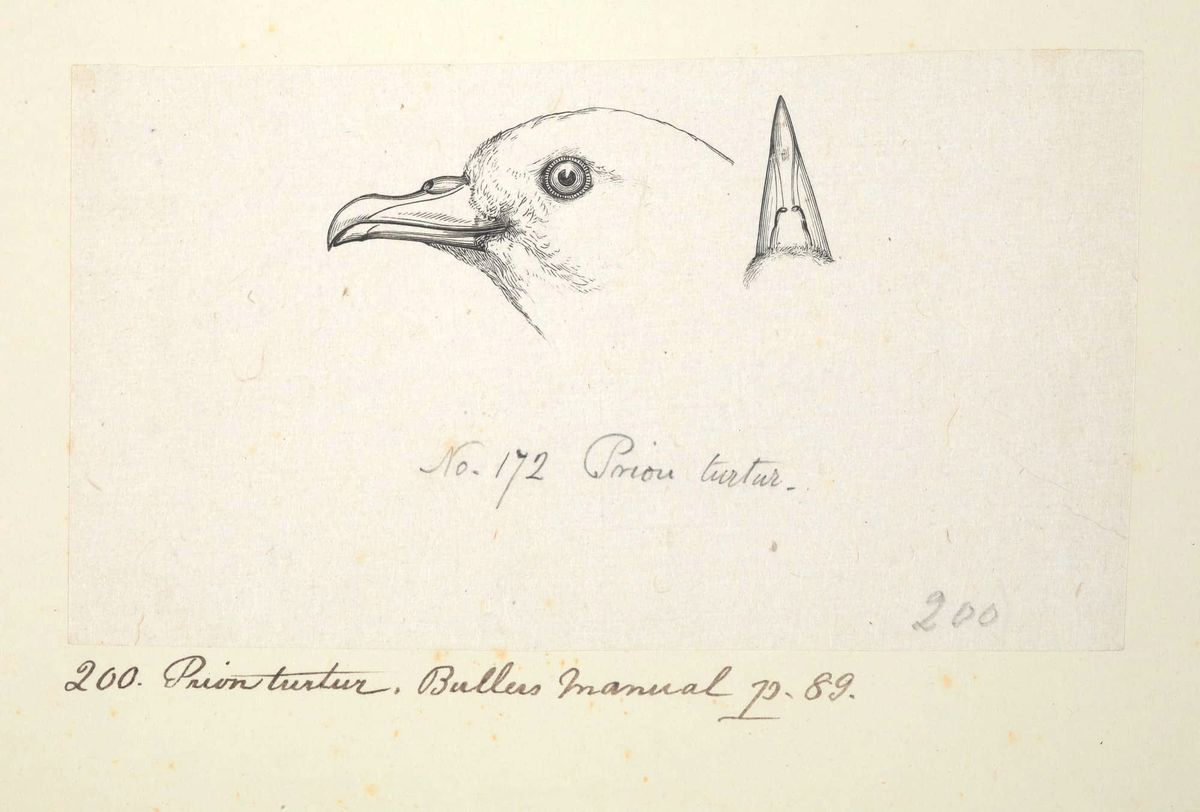
A prion is a small seabird. A healthy Salvin's prion fledgling leaves its colony weighing about 150 grams. It can use the difference in airspeed on the windward and leeward sides of waves, which lets it cover long distances cheaply. It feeds at the surface, taking krill and other small crustaceans from the top few centimetres of water.
Riding the wind works well in the Southern Ocean because there are almost no obstacles. The exception is the 1500 kilometres of New Zealand. When a gale sets in over the Tasman Sea between Australia and New Zealand and holds for days, the birds have to fight to stay offshore. If the gale outlasts them, they come ashore in their thousands, starving. It is called a wreck.
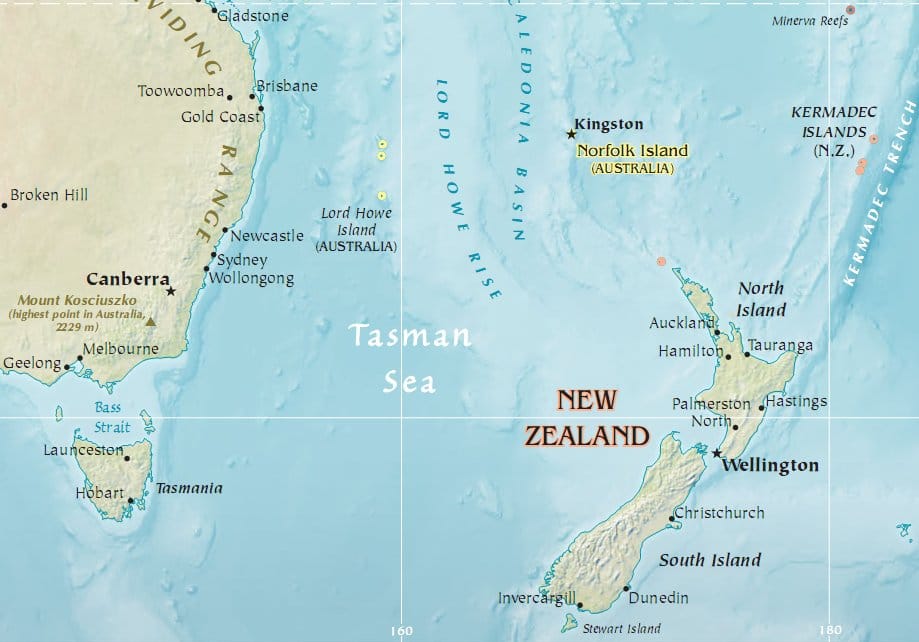
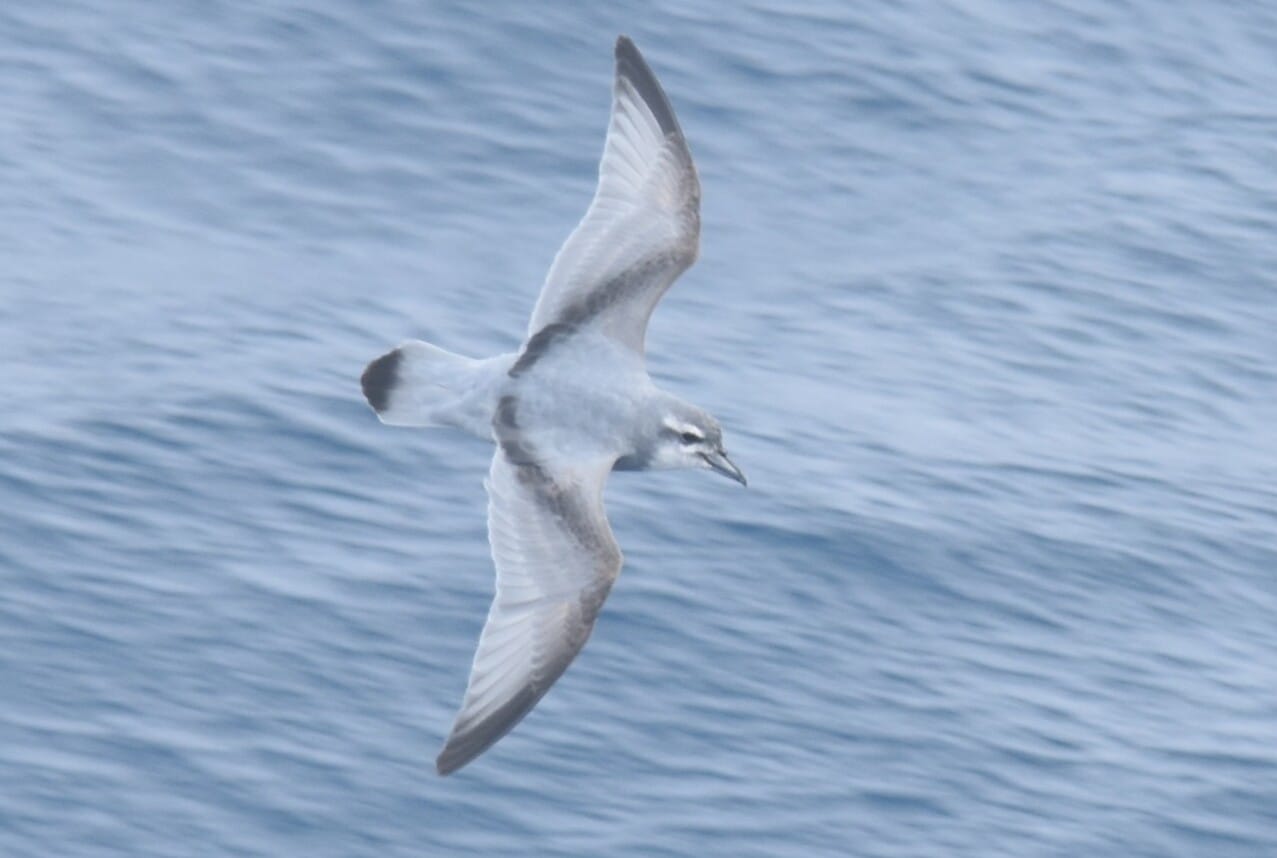
Map of Tasman Sea; Salvin's Prion (Pachyptila salvini) near Prince Edward Islands by Justin Ponder
People walk those beaches afterwards and pick the birds up. Some are counted and left. Some are kept, skinned or frozen, and end up in a museum drawer with a tag listing a beach, a date and a name.
Prions are hard to tell apart. Several species look much the same — blue-grey above, white below — and identifying them from beach-cast material comes down mostly to their bill. Peter Harper worked on this for years, and his accumulated experience is published in his 1980 monograph on storm-cast prions.
His work required handling a lot of dead birds. Between 1958 and 1977 he examined 9,247 of them, all cast ashore between Ōtaki and Pukerua Bay on the Kāpiti Coast or on the south Wellington beaches around Petone. From 1,979 of those birds he took out the gizzard and proventriculus and looked inside (Harper & Fowler, 1987). Jim Fowler, the co-author on the paper, is a statistician who later co-wrote Practical statistics for field biology.
Seabirds swallow grit to help grind their food, and the grit floating on this ocean is usually volcanic rock like pumice. What Harper and Fowler found is that next to the pumice there were plastic pellets, about 3 millimetres across — the same size as the pumice, and to a bird moving fast across the surface presumably hard to tell apart from it. Three hundred of the 1,979 birds, about 15%, had them.
These birds had starved. Their forestomachs were empty and their weights had dropped to a fraction of a healthy adult's. In a single wreck of 323 young Salvin's prions in June 1966, the lighter the bird, the more plastic it held; the lightest weighed 76 grams and had thirteen pellets in it. Prions, the authors concluded, will eat anything resembling food before they die.
What caught their attention, though, was what happened when the birds were sorted by year. The fraction with plastic in the gizzard was zero through the late 1950s, then rose sharply from the early 1960s and stayed up.
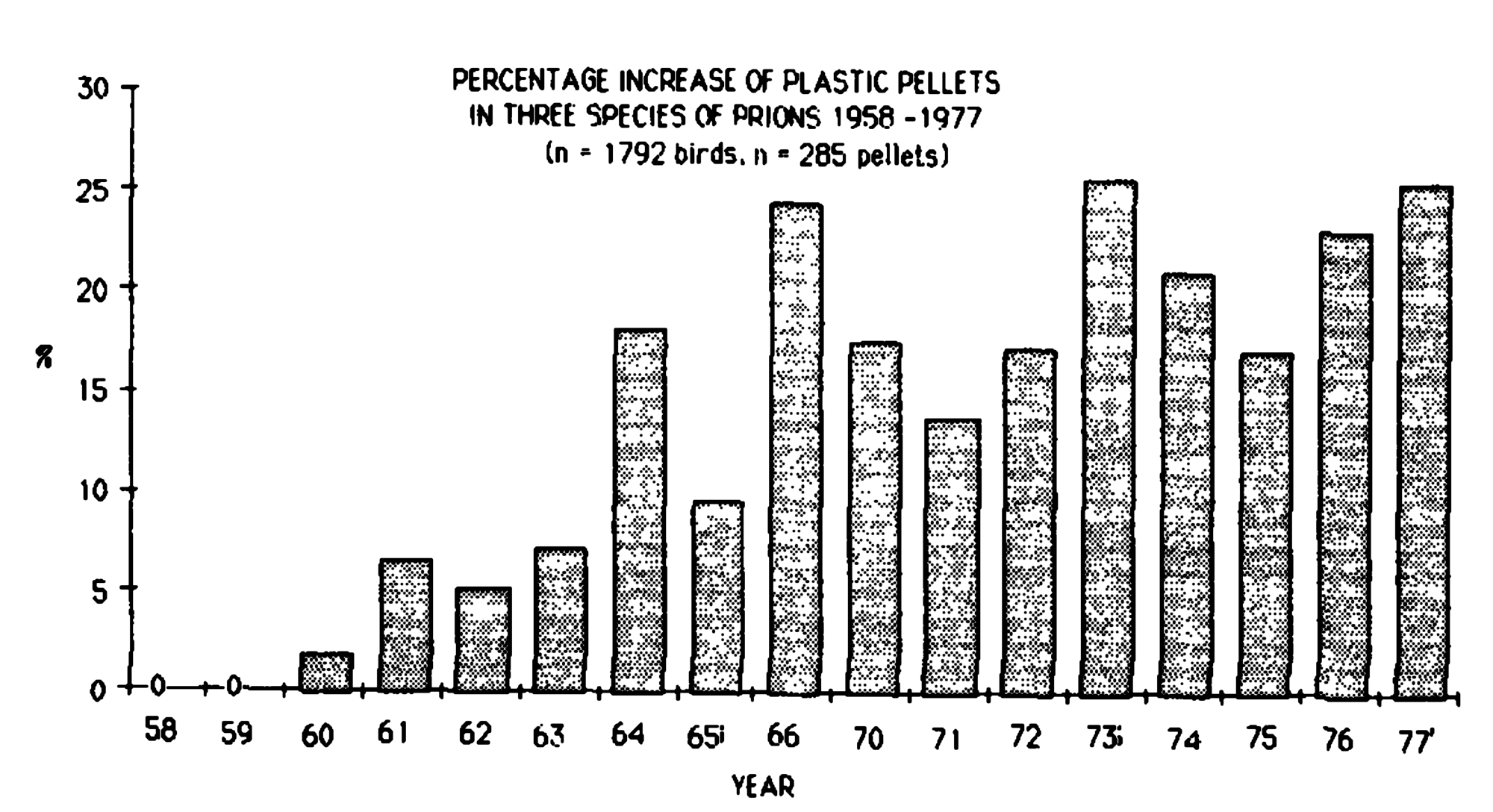
Plastic in the ocean was not recognised as a problem until the early 1970s, and pellets were not documented floating at sea until Carpenter and Smith found them across the western Sargasso Sea in 1972. The series described by Harper and Fowler starts fourteen years before that.
To my surprise, I could not find any photographic trace of this collection of birds. It seemed odd that arguably the earliest physical evidence of plastic inside an animal has no picture of it.
The obvious place to look was New Zealand's national museum, Te Papa Tongarewa, in Wellington. Luckily, curator Colin Miskelly confirmed that the collection of prions is well preserved and was kind enough to show it to me. It is no longer possible to match an individual bird to a data point in the paper — that connection is gone — so these are simply prions from the right period and the right beaches.
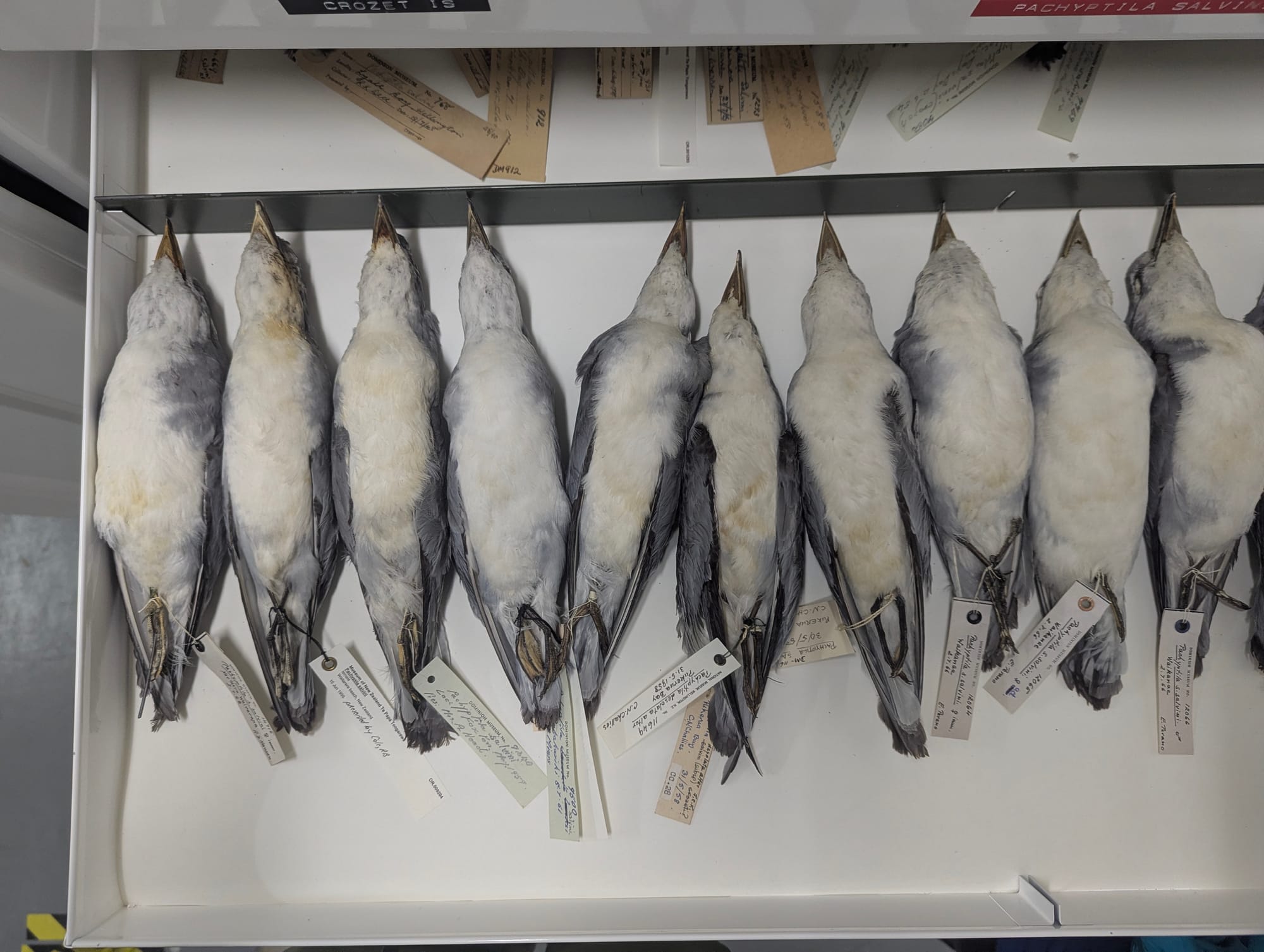
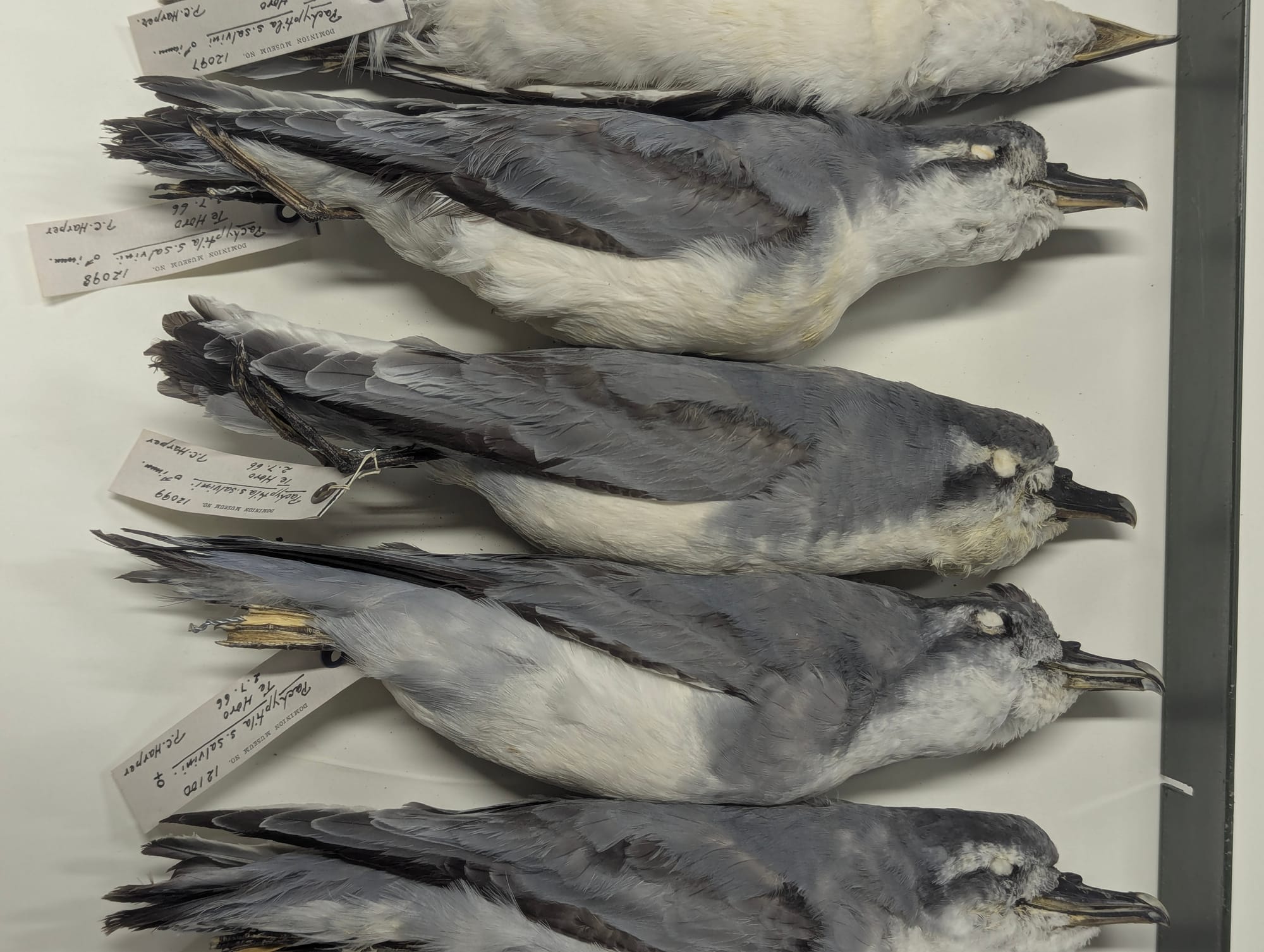
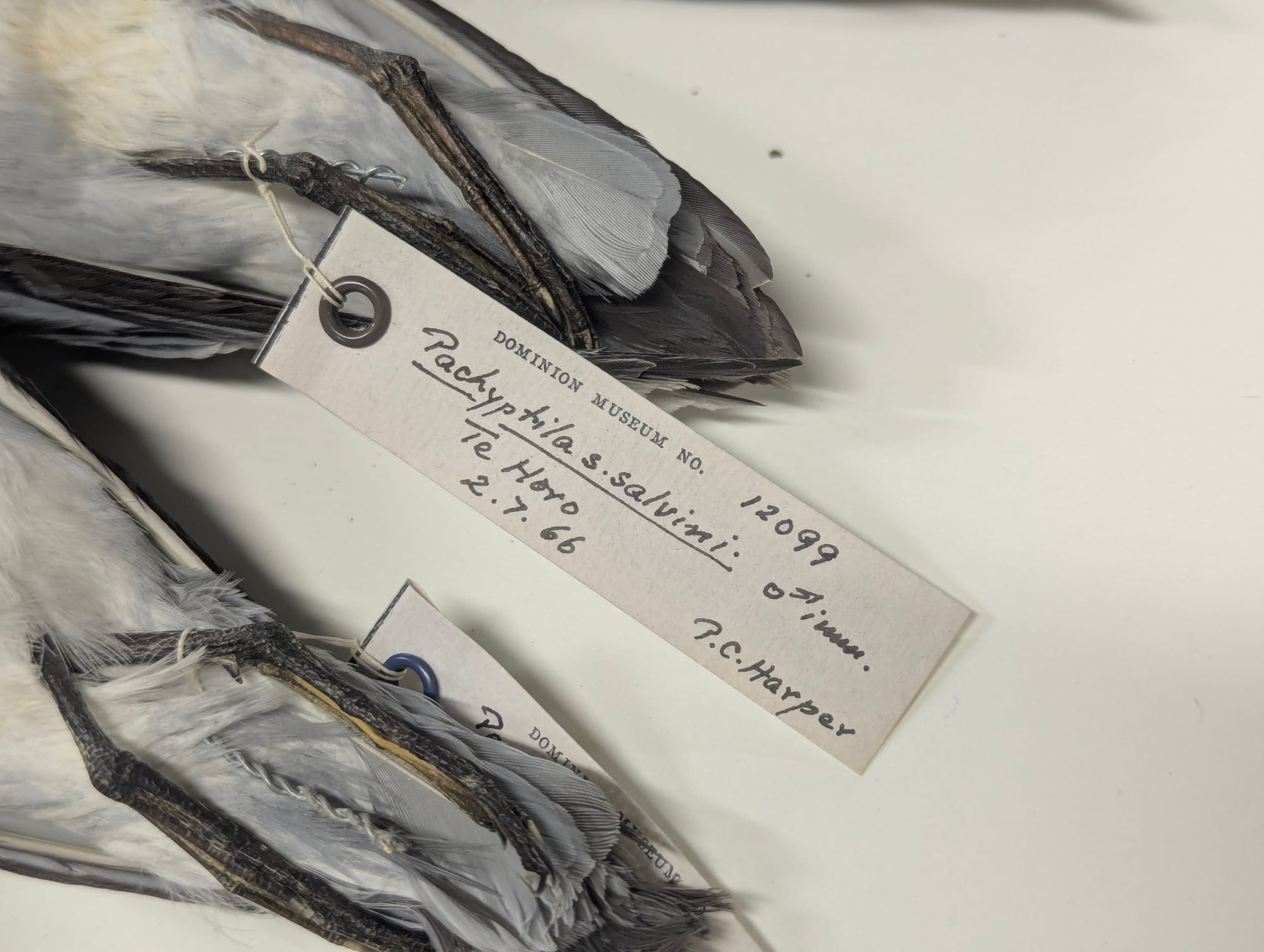
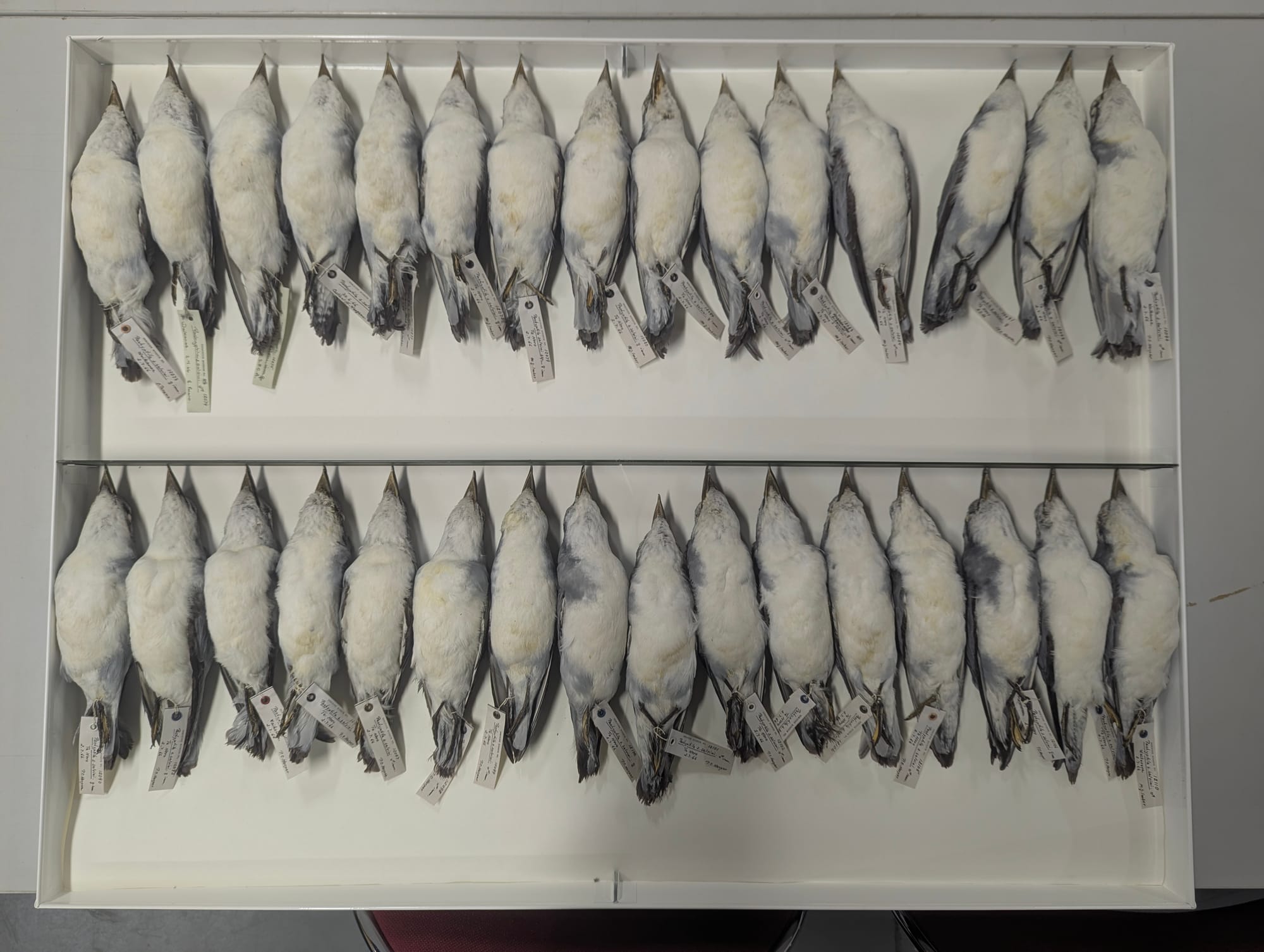
Photographs by the author.
This transition from no plastic pellets observed to being ubiquitous is an environmental version of the accidental climate science we wrote about a while ago. It shows the importance of archiving data even when its value is not immediately apparent. The birds were collected and examined year after year without a particular question in mind — who in the 1950s and 1960s would have thought to ask it? — and only later did the record turn out to matter.
An episode of this kind seems under-used for science communication. It has all the ingredients of a good story: a specific time, place and person, plus a changing number that is easy to understand.
References
Carpenter, E. J., & Smith, K. L., Jr. (1972). Plastics on the Sargasso Sea surface. Science, 175(4027), 1240–1241. https://doi.org/10.1126/science.175.4027.1240
Harper, P. C. (1980). The field identification and distribution of the prions (genus Pachyptila), with particular reference to the identification of storm-cast material. Notornis, 27(3), 235–286. https://doi.org/10.63172/340503cwjrny
Harper, P. C., & Fowler, J. A. (1987). Plastic pellets in New Zealand storm-killed prions (Pachyptila spp.) 1958–1977. Notornis, 34(1), 65–70. https://www.birdsnz.org.nz/wp-content/uploads/2022/04/Notornis_34_1-1987-pp65-70.pdf